
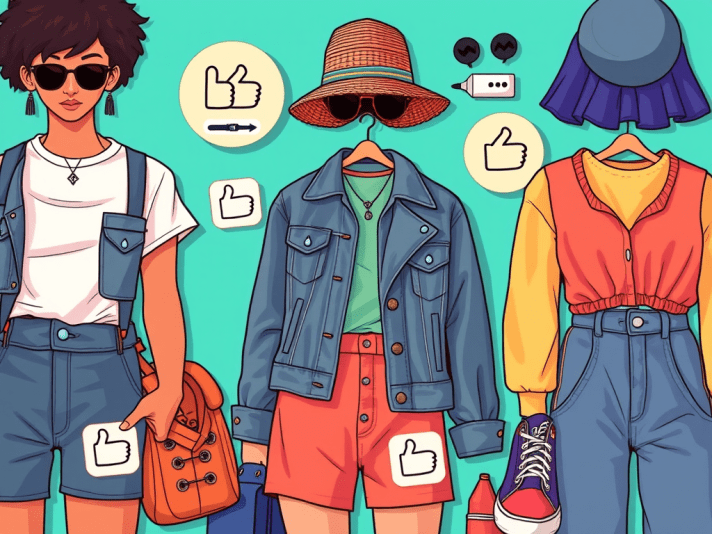
Founded in 2011 by Simon Beckerman, Depop is a London-based social e-commerce platform that has become central to Gen Z’s fashion culture. Often compared to a blend of Instagram and eBay, it allows users to buy and sell secondhand clothes through an engaging interface where they can “like” items and follow their favorite sellers. By 2025, Depop has grown to over 43 million registered users and has surpassed $5 billion in sales since its inception. It remains an independent subsidiary of Etsy, which acquired it in 2021 for approximately $1.6 billion to tap into the thriving resale market.
The platform’s success largely stems from its focus on circular fashion and unique styles like “sleaze academia” and “cottagecore,” which have become trendy on TikTok and Instagram. To stay competitive in 2025, Depop has simplified the selling process by removing traditional selling fees for users in the US and UK, while standard payment fees still apply. Sellers are advised to upload high-quality, attractive photos and use detailed tags to boost visibility through the app’s AI-driven curation system. Despite its popularity, the platform emphasizes safety and community support by offering tools like the Depop Safety Centre to protect users and ensure secure transactions. https://news.depop.com/company-news/depop-launches-new-safety-centre.
Now let’s talk to Catherine G., a teenager from Brooklyn, about Depop.
How often do you use Depop?
I visit the website daily to browse new items and check if any of mine have sold. I enjoy scrolling through to see the latest arrivals.
Do you buy and sell items? How do you find the prices?
Yes, for both aspects. I rely on Google Lens to determine fair prices for my items
What do you like most about Depop?
I appreciate that Depop aligns with my interests and features the fashion I find most appealing.
Do you also use Poshmark or other resale platforms?
No, I always discover what I like and need on Depop.
Any tips for new Depop users?
Yes, be cautious of scams, and if you have any doubts, always consult the Depop Safety Centre.
Do you feel that using Depop helps the environment?
Yes, because we can give items new life instead of letting them end up in landfills.
Catherine G. provided valuable insights into Depop. Teenagers like using Depop because it turns traditional thrifting into a social and entrepreneurial activity influenced by social media, fitting their values and style. Often likened to a combination of Instagram and eBay, it presents a visually appealing grid where users can like, comment, and follow their favorite curated shops. For a generation that values sustainability, Depop offers a responsible alternative to fast fashion, encouraging a “circular” economy and the hunt for unique Y2K or vintage pieces that match their style. Besides shopping, the app encourages teens to become small entrepreneurs by selling items from their bedrooms, with some top sellers earning enough for financial independence before college. Overall, Depop is a vibrant community where fashion acts as a means of self-expression and social activism.
Thank you, Catherine G.
Until next time, Happy Thrifting!
 ToniOnThrifting